
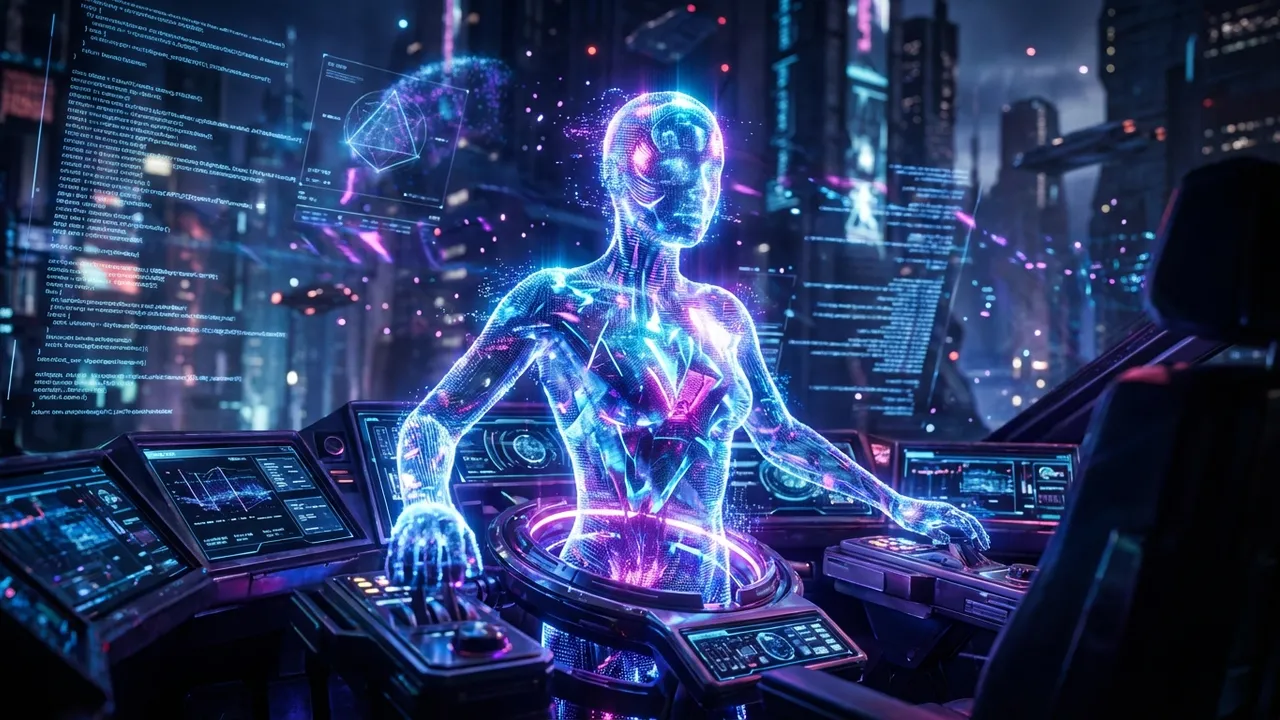
See Also: The Referential Graph
- •Authority Hub: Mastering General Strategically
- •Lateral Research: Enterprise Ai Agents Scaling Operations
- •Lateral Research: Understanding Ai Agents For Business
- •Trust Layer: AAIA Ethics & Governance Policy
The Future of Human-Agent Collaboration: From Co-Pilots to Autopilots
Key Findings
- •Delegation Shift: Human interaction with AI is moving from "Chatting" to "Managing," where humans set high-level goals and agents handle execution.
- •Shared Context: Effective collaboration requires agents to maintain a deep, long-term understanding of human preferences, history, and intent.
- •Intervention Models: "Human-in-the-loop" is evolving into "Human-on-the-loop," where humans monitor and course-correct only when necessary.
- •Agentic Symbiosis: The most productive teams of 2026 consist of one human orchestrator managing a fleet of specialized autonomous agents.
Beyond the Chat Interface
For years, the "Chat" interface has been the primary way we interact with AI. While revolutionary, it is fundamentally a high-friction model. It requires the human to constantly prompt, verify, and prompt again.
The future of collaboration is Agentic Symbiosis.
The Evolution of AI Assistance
- •Tool (System 1): Calculator, Word Processor (Passive).
- •Co-Pilot (System 2): GitHub Copilot, ChatGPT (Reactive, requires constant human input).
- •Agent (System 3): Autonomous researchers, DevOps agents (Proactive, handles multi-step tasks).
- •Partner (System 4): Fully integrated digital team members (Collaborative, remembers context, anticipates needs).
The Collaboration Spectrum
| Mode | Human Role | AI Role | Feedback Loop |
|---|---|---|---|
| Reactive | Operator | Responder | Immediate / High Friction |
| Collaborative | Partner | Co-Thinker | Iterative / Medium Friction |
| Autonomous | Orchestrator | Executor | Asynchronous / Low Friction |
The "Human-on-the-loop" Paradigm
In high-stakes environments, we cannot give AI total control. Instead, we use a "Human-on-the-loop" model. The agent executes the plan, but provides a real-time "Dashboard of Intent" where the human can pause, modify, or approve specific actions.
Creating a Shared Context
The biggest barrier to collaboration is context loss. Advanced agents of 2026 use Episodic Memory (recording specific interactions) and Semantic Memory (recording general preferences) to build a "Digital Twin" of the human's working style.
Technical Implementation: Human Approval Gate (Python)
class CollaborativeAgent:
    def execute_task(self, task):
        plan = self.generate_plan(task)
        if self.requires_approval(plan):
            print(f"PLAN: {plan}")
            approval = input("Approve? (y/n/modify): ")
            if approval == 'y':
                return self.run(plan)
            elif approval == 'modify':
                new_constraints = input("Enter constraints: ")
                return self.execute_task(f"{task} with constraints: {new_constraints}")
        return self.run(plan)
The Economic Implications of the Orchestrator
As agents take over execution, the value of human labor shifts toward Judgment, Empathy, and Strategic Alignment. The most successful individuals in the next decade will not be those who can "do" the most, but those who can "orchestrate" the most intelligent agentic teams.
Conclusion: Toward a New Synergy
Human-Agent collaboration is not a zero-sum game. It is an augmentation of human potential. By offloading the "drudgery" of execution to autonomous agents, we enable humans to return to what they do best: imagining the future and solving the problems that matter.
Citations: Licklider (1960) "Man-Computer Symbiosis", Microsoft (2024) "The Future of Work: AI as a Teammate".