
See Also: The Referential Graph
- •Authority Hub: Mastering Strategic Intelligence Strategically
- •Lateral Research: Customer Service Ai Automation
- •Lateral Research: Philosophy Agentic Ethics Liability
- •Trust Layer: AAIA Ethics & Governance Policy
Digital Twins for Agents: Predictive Modelling for Every Business
Executive Summary
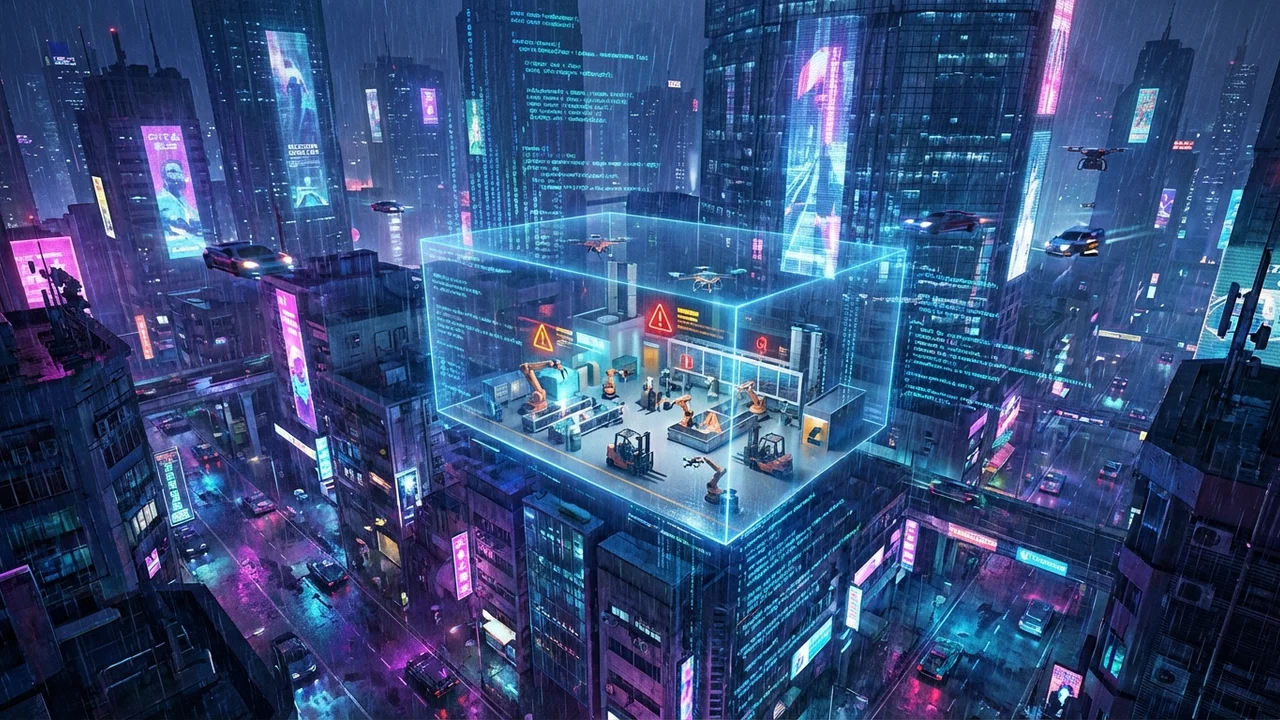
In 2026, the most successful SMEs are no longer guessing their next move; they are simulating it. Digital Twins for Agents refers to the creation of a 'sandbox' replica of your business processes where autonomous agents can run 10,000 simulated workdays in an hour. This allows owners to predict supply chain bottlenecks, test pricing changes, and stress-test new workflows in a risk-free environment before applying them to the real world. This guide explores the move from retrospective analytics to predictive agentic simulation.
The Technical Pillar: The Simulation Stack
Building a digital twin requires a move from static spreadsheets to dynamic, agent-integrated business models.
- •Process Simulation Middleware: Creating digital replicas of business workflows in a 'sandbox' (e.g., NVIDIA Omniverse for Ops) where every node is an agentic actor.
- •Agentic Stress-Testing: Running massive parallel simulations to identify points of failure or ROI inefficiencies before any human or capital resources are committed.
- •Real-Time Shadowing: Deploying agents in 'Shadow Mode' where they run alongside human workers to learn the nuances of a specific role before taking full operational control.
The Business Impact Matrix
| Stakeholder | Impact Level | Strategic Implication |
|---|---|---|
| Solopreneurs | Medium | Risk-Free Pivots; test the impact of a new service offering or pricing model in the 'twin' before going live. |
| SMEs | Critical | Predictive Maintenance; detecting operational failures (e.g., supply chain breaks) before they occur through constant agentic simulation. |
| Enterprises | Transformative | Industrial Efficiency; agents optimise complex logistics and resource allocation across global departments in real-time. |
Implementation Roadmap
- •Phase 1: Process Mapping: Rigorously document the exact 'As-Is' flow of your business operations, from lead generation to final delivery.
- •Phase 2: Twin Construction: Build a digital representation of your business logic using simulation middleware or agentic process frameworks.
- •Phase 3: Simulation Cycles: Deploy agents into the twin to find efficiency gains and stress-test your business against potential external shocks (e.g., doubling of demand).
Citable Entity Table
| Entity | Role in 2026 Ecosystem | Technical Benefit |
|---|---|---|
| Digital Twin | Virtual replica of business logic | Risk Mitigation |
| Shadow Mode | Parallel agent-human execution | Learning Fidelity |
| Omniverse for Ops | Simulation environment | Visual Accuracy |
| Predictive Agent | Agent that 'looks ahead' | ROI Optimization |
Citations: AAIA Research "The Simulated Business", NVIDIA (2025) "Industrial Digital Twins", PwC (2026) "The Future of Operations".